 Continue with Facebook
 Continue with Google
 Continue with Apple
Un Été Français
Details
Catherine Doss full profile / Piano and Mezzo-soprano / 2 musicians
Other players: Maggie Ramsey
Full program notes
FRANZ LISZT
“Oh! Quand je dors,” S. 282
GABRIEL FAURÉ
“Les Berceaux,” Op. 23, No. 1
FRÉDÉRIC CHOPIN
Mazurka in A minor, Op. 17, No. 4
Mazurka in C major, Op. 24, No. 2
Ballade No. 3 in A-flat major, Op. 47
Intermission
HECTOR BERLIOZ
“La mort d’Ophélie,” Op. 18, No. 2
FRÉDÉRIC CHOPIN
Waltz in C-sharp minor, Op. 64, No. 2
PHILIP GLASS (b. 1937)
Etude No. 6 (1994)
GEORGES BIZET
Habanera (“L’Amour est un oiseau rebelle”), from Carmen
JACQUES OFFENBACH
"Ah! Quel diner" from La Périchole
Program Notes
Franz Liszt (1811–1886)
"Oh! quand je dors," S. 282
Composed in 1842, Liszt's setting of Victor Hugo’s poem is among the finest examples of the nineteenth-century French art song. The speaker longs for a dream in which the beloved appears "like Laura to Petrarch," awakening him with a kiss. Liszt's soaring vocal line and luminous piano writing transform Hugo's verse into a vision of longing, beauty, and transcendence.
Gabriel Fauré (1845–1924)
"Les berceaux," Op. 23, No. 1
Fauré's Les berceaux ("The Cradles"), composed in 1879 to a poem by Sully Prudhomme, contrasts the gentle rocking of cradles with the movement of ships departing for sea. Beneath its understated elegance lies a poignant meditation on love, separation, and the sacrifices made by those who remain behind. The piano's rocking accompaniment evokes both the rocking of a cradle and the swell of the sea.
Frédéric Chopin (1810–1849)
Mazurka in A minor, Op. 17, No. 4
Mazurka in C major, Op. 24, No. 2
Ballade No. 3 in A-flat major, Op. 47
Although he spent much of his life in Paris, Chopin never lost his connection to his native Poland. His mazurkas transform traditional Polish dances into intimate musical poems, rich with nostalgia, rhythmic subtlety, and harmonic imagination. The haunting A minor Mazurka contrasts with the brighter, playful spirit of the C major.
Composed during the summer of 1841 at George Sand's country estate in Nohant, the Third Ballade was written during one of the happiest and most productive periods of Chopin’s life. Its buoyant lyricism, playful charm, and moments of quiet wonder culminate in a radiant and exhilarating conclusion.
Intermission
Hector Berlioz (1803–1869)
"La mort d'Ophélie," Op. 18, No. 2
Inspired by Shakespeare's Hamlet, La mort d'Ophélie recounts the tragic death of Ophelia through Ernest Legouvé's French text. Berlioz's delicate setting captures the heroine's innocence and vulnerability while the flowing piano accompaniment suggests the river carrying her to her fate. The work reflects the Romantic fascination with Shakespeare and the expressive possibilities of French song.
Frédéric Chopin (1810–1849)
Waltz in C-sharp minor, Op. 64, No. 2
Unlike a ballroom waltz, Chopin's waltzes were intended for the salon and concert stage. The Waltz in C-sharp minor alternates graceful elegance with moments of wistful reflection, revealing the composer's gift for combining dance rhythms with expressive lyricism.
Philip Glass (b. 1937)
Etude No. 6 (1994)
Philip Glass composed his series of piano études as both technical studies and concert works. Etude No. 6 demonstrates his signature style of repeating patterns that gradually evolve through subtle harmonic and rhythmic shifts. What begins with apparent simplicity unfolds into a work of remarkable emotional depth and quiet intensity.
Georges Bizet (1838–1875)
Habanera ("L'amour est un oiseau rebelle"), from Carmen
The Habanera introduces Carmen, one of opera's most unforgettable heroines. Borrowing the rhythm of the Cuban habanera dance, Bizet gives Carmen a sensual, confident declaration that love is free, unpredictable, and impossible to possess. The aria's infectious melody has made it one of the most recognizable in all of opera.
Jacques Offenbach (1819–1880)
"Ah! quel dîner!" from La Périchole
Known as the "father of operetta," Offenbach delighted audiences with sparkling wit, memorable melodies, and affectionate satire. In La Périchole, inspired by eighteenth-century Peru, "Ah! quel dîner!" follows an extravagant meal and captures the comic charm, theatrical flair, and irresistible energy that made Offenbach one of Paris's most beloved composers.
Videos from this player

Other programs from this ensemble
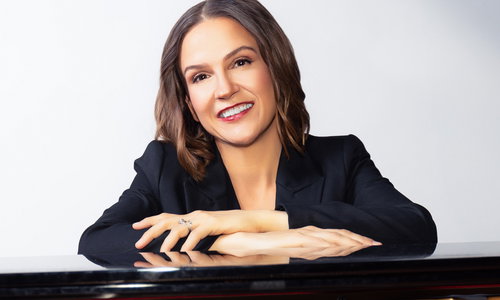
- Musician profile: Catherine Doss
-
 Instruments:
Solo piano and Mezzo-soprano
Instruments:
Solo piano and Mezzo-soprano
- Musicians: Catherine Doss, Maggie Ramsey