
- COVID vaccination required (honor system)

- COVID testing not required

- This is an indoor event

- Masks are not required
- If you feel sick, stay home

- Bring any drinks except red wine
-
Wheelchair access
- Wheelchair Accessible
-

- Kid-friendly event

This is a groupmuse
A live concert in a living room, backyard, or another intimate space. They're casual and friendly, hosted by community members.
Host
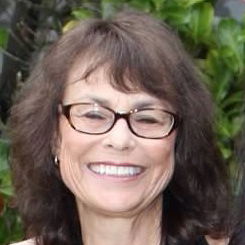
Please welcome back the talented pianist, Theodora Serbanescu-Martin, to perform an evening of Brahms, including Bach Chaconne transciption, and Opus 116 and 76, along with some infrequently performed CPE Bach.
What's the music?

C. P. E. Bach: Fantasia in F-sharp Minor, Wq. 67 / H. 300
Brahms : Capriccio in F-sharp Minor, Op. 76, No. 1
Brahms after J. S. Bach — Chaconne in D Minor for the Left Hand Alone Brahms — Fantasien, Op. 116
Brahms & Baroque Fantasies traces a hidden history of fantasy, transcription, and pianistic difficulty across more than a century. Beginning with C. P. E. Bach's extraordinary F-sharp-minor Fantasia, the program moves without pause into Brahms's Capriccio in the same key, hearing Brahms's densely layered keyboard writing through the improvisatory freedom, sudden turns, and contrapuntal play of an older tradition. At its center is Brahms's remarkable transcription of J. S. Bach's Chaconne for the left hand alone—a work that transforms historical recovery into an intensely physical encounter between an older musical object and the modern pianist's body. Brahms's late Fantasien, Op. 116, bring these threads together: intimacy and virtuosity, freedom and constraint, improvisatory fantasy and rigorous construction. Pianist and musicologist Theodora Serbanescu-Martin interweaves the performance with an informal discussion drawn from her research on Brahms, transcription, difficulty, and the embodied histories of pianistic technique.
Where does this music come from?
PROGRAM NOTES
The fantasy has long occupied a curious place between freedom and discipline. In eighteenth-century keyboard culture, the "freie Fantasie," or free fantasia, cultivated the impression of spontaneous thought: sudden changes of affect, interrupted phrases, unexpected silences, harmonic wandering, and ideas that seem to emerge and disappear before our ears. Yet such freedom depended upon rigorous training: a thoroughly embodied, internalized repertory of gestures and harmonic conventions.
C. P. E. Bach’s Fantasia in F-sharp Minor, Wq. 67, composed in 1787, inhabits this world of cultivated spontaneity. A related version for keyboard and violin bears the evocative title "C. P. E. Bachs Empfindungen" (“C. P. E. Bach’s Feelings”), linking the work to the heightened sensitivity of Empfindsamkeit, or the late-eighteenth and early-nineteenth-century "sensibility style." Recitative-like passages, abrupt harmonic turns, silence, and volatile changes of character and dynamic make written composition sound almost improvised. On this program, the final low F-sharp morphs directly into Brahms’s Capriccio in F-sharp Minor, Op. 76, No. 1 (1871), collapsing nearly a century between the two composers. Brahms’s capriccio preserves the fantasy’s instability while transforming it through dense nineteenth-century pianism that includes overlapping rhythms, especially hemiolas, outstretched arpeggios, and contrapuntally set melodies. Its harmonic wandering also recalls Chopin’s Prelude in C-sharp Minor, Op. 45, allowing several histories of pianistic fantasy to coexist within the same piece.
Brahms’s historicist investment in earlier music reflects both intellectually and physically in his left-hand transcription of J. S. Bach’s Chaconne from the Partita in D Minor, BWV 1004. Writing to Clara Schumann in 1877, Brahms explained that playing the Chaconne with one hand gave him an unusual sense of identification with the violinist: “the same difficulty, the nature of the technique, the rendering of the arpeggios” made him “feel like a violinist.” Yet, rather than amplifying Bach through the resources of the modern piano, Brahms deliberately removed half of the pianist’s ordinary resources. Through this constraint, idiomatic translation is represented by effort, or transcription that codes bodily constraint as well as notes.
The history of the arrangement further contextualizes this notion. Clara received it while suffering from an injured right hand and called the piece “a real refuge,” since it allowed that hand to rest. Yet its formidable demands still strained her left hand. The same restriction could therefore operate as accommodation and difficulty at once—a tension central to my research on Brahms’s pianism.
That tension returns in the Fantasien, Op. 116 (1892), where Brahms’s late, intimate keyboard writing often conceals the logic of the technical exercise. Metric displacements, obsessive repetitions, unusual and constraining fingerings, and patterns related to his "51 Übungen" continually test the relationship between musical expression and physical capacity. Clara herself complained that the opening Capriccio made an entire passage sound “wrong” to her ears: Brahms deliberately places accents and slurs where the body and ear resist expecting them.
Across the program, then, fantasy never means freedom from constraint. From C. P. E. Bach’s improvisatory wandering to Brahms’s late Fantasien, freedom emerges through an ongoing negotiation among historical memory, disciplined technique, musical imagination, and a particular body at the keyboard.
Location
Exact address sent to approved attendees via email.
This is a groupmuse
A live concert in a living room, backyard, or another intimate space. They're casual and friendly, hosted by community members.
Host
Attendees







 Continue with Facebook
 Continue with Google
 Continue with Apple
Comments
Comment sections are only for participants. Please sign in and reserve a spot above to view comments.